
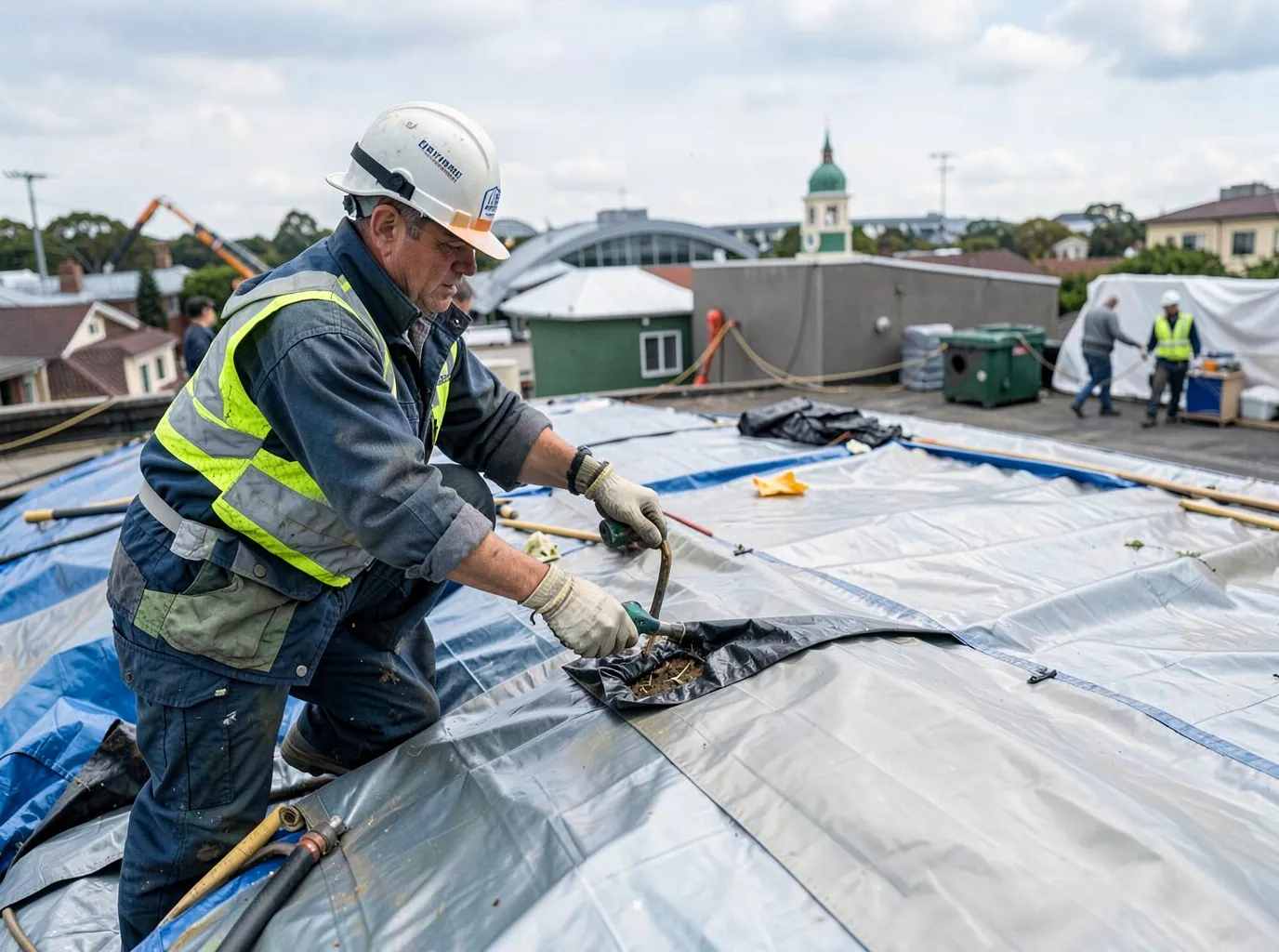
Victoria summers bring frequent thunderstorms and high humidity that drive water under older asphalt shingles common on homes in Downtown Victoria and Northside. When a leak is reported we use reinforced polyethylene tarps weighted with sandbags along the eaves and secured with furring strips to the decking, avoiding damage to the existing flashing around chimneys or skylights. Mild winters mean crews can work year-round, but sudden cold fronts can make the material stiff, so we pre-fold edges before climbing.
Homes near Riverside Park and the Texas Zoo often sit on slightly sloped lots where runoff pools against the north wall during heavy rain. Tarping here requires extra overlap on the lower courses and temporary diversion channels made from rolled felt to keep water moving toward the gutters. We never nail through the tarp itself on metal-roof sections found on some outbuildings near Victoria Regional Airport, using only perimeter clamping to prevent wind lift.
Access challenges appear on two-story homes in Towne Plaza where ladder placement is limited by mature oaks. In those cases we stage from the ground with extension poles and pre-cut tarp panels sized to the damaged section so the job finishes before the next front moves through from the coast. Every tarp is inspected at the seams for pin holes before it leaves the truck because humid air accelerates mold growth once moisture is trapped.
Technician insight
In Victoria the thing that catches most people out with Emergency Roof Tarping is how fast humidity softens older felt underlayment on Northside homes built before the 1980s; once water sits it migrates laterally under the tarp edges within a day unless we add an extra felt strip along the upslope.
Northside Wind-Driven Leak
Heavy overnight rain pushed water under lifted shingles on a 1970s home near Towne Plaza. We found the entry at a valley leading into the attic over the kitchen. A 12-by-16 reinforced tarp was installed with battens and sandbags before the next band of storms arrived, keeping the ceiling dry until shingle replacement the following week.
Emergency Roof Tarping Services We Offer
✓Storm Damage Roof Tarping
Immediate coverage after hail or wind events to keep water out of attics in Victoria neighborhoods until insurance inspections occur.
✓Tree Impact Tarping
Rapid tarping of punctures caused by falling limbs common after summer storms around Riverside Park and older Northside properties.
✓Leak Isolation Tarping
Targeted sections over active interior leaks in Downtown Victoria homes to protect ceilings and electrical fixtures.
✓Wind Uplift Tarping
Re-securing lifted shingles and installing temporary membranes on roofs exposed to coastal gusts near Port Lavaca routes.
✓Commercial Flat Roof Tarping
Weighted ballast systems for low-slope commercial buildings in Towne Plaza to prevent ponding after heavy rain.
Emergency Roof Tarping Cost in Victoria, TX
| Service | Typical Range | What Affects It |
|---|---|---|
| Single-story residential tarp | $250–$550 | Size of leak area and ladder access from street |
| Two-story residential tarp | $450–$850 | Extra labor for height and tree clearance |
| Small commercial flat section | $600–$1,100 | Ballast requirements and roof membrane type |
| After-hours or weekend response | $150–$300 added | Sat 9am–2pm or after 6pm weekdays |
Ranges are typical for Victoria, TX and confirmed with an exact written quote before any work starts.
How it works
- 1
On-Site Assessment
We walk the roof from the ground and attic to locate active water entry points and note any underlying decking damage before selecting tarp size.
- 2
Material Staging
Panels are cut and edges folded on the ground, then carried up with ropes to reduce walking on wet surfaces.
- 3
Secure Installation
Tarps are overlapped at least three feet, fastened along the perimeter with wood battens, and checked for wind gaps.
- 4
Final Walk-Through
Interior ceilings are inspected again and the homeowner is shown the coverage limits and next-day follow-up options.
Pricing
Most emergency tarps in Victoria fall between a few hundred dollars and low four figures depending on roof height, access, and storm urgency.